
Braces in Pala, Kottayam District
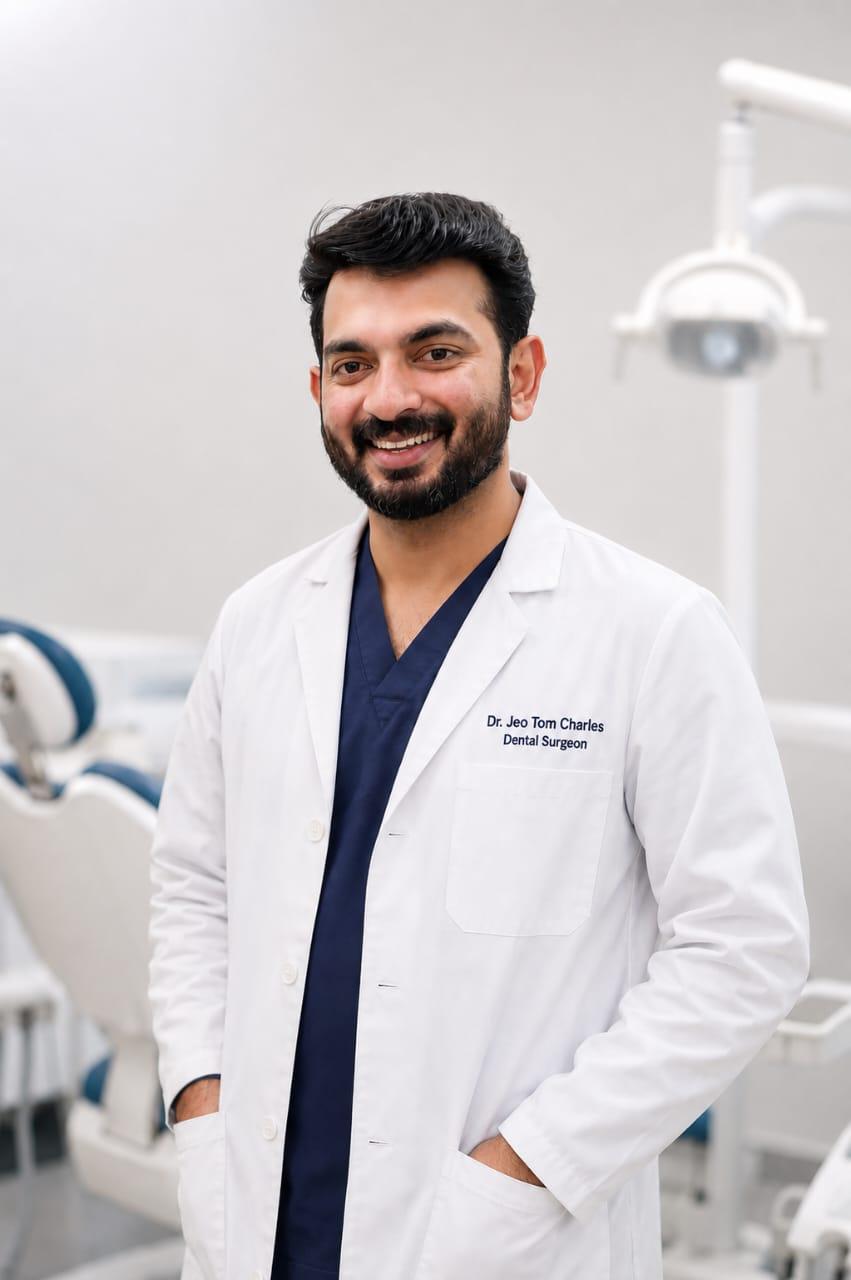
Metal, ceramic and self-ligating braces, led by Dr. Jeo Tom Charls — MDS Orthodontics and Dentofacial Orthopaedics — at Smile Architects, Pala.
Fixed orthodontic braces
Fixed braces are bonded to the outer surfaces of the teeth and work continuously — without relying on the patient to remember to insert or wear them. Brackets and an archwire create controlled, sustained pressure to move teeth precisely into the planned positions.
At Smile Architects, braces treatment is planned and supervised by Dr. Jeo Tom Charls, who holds a Master of Dental Surgery (MDS) in Orthodontics and Dentofacial Orthopaedics — a postgraduate qualification dedicated exclusively to tooth movement, jaw growth and bite correction.
Types of braces available
The appropriate brace type depends on your clinical needs, aesthetic preferences, age and lifestyle. All the following are available at Smile Architects:
Metal Braces
The most commonly used fixed appliance. Stainless steel brackets are bonded to the outer tooth surface and connected by a metal archwire. Highly effective for all degrees of crowding, spacing and bite problems.
Suitable for: All ages and most cases, including complex bite corrections
Durable, cost-effective, and reliably predictable for a wide range of problems.
Ceramic Braces
Tooth-coloured ceramic brackets that blend with the natural colour of teeth. The archwire may also be tooth-coloured. Aesthetically more discreet than metal braces while working on the same mechanical principle.
Suitable for: Adults and older teenagers who prefer a less noticeable appliance
Slightly more delicate than metal brackets. Oral hygiene instruction is particularly important.
Damon / Self-Ligating Braces
Self-ligating brackets use a built-in clip mechanism instead of elastic ties to hold the archwire. This may reduce friction and can allow for more comfortable tooth movement in some cases.
Suitable for: Patients where reduced friction and fewer elastic tie changes are preferred
Available in metal and ceramic versions. Dr. Jeo Tom Charls has clinical experience with Damon systems.
The treatment process
Initial Assessment
Comprehensive orthodontic examination including clinical assessment, digital X-rays, photographs, and, where required, study models. All treatment options — braces, lingual braces, clear aligners — are discussed during this appointment.
Treatment Planning
A personalised treatment plan is prepared, outlining the type of appliance recommended, any preparatory treatment (such as extractions), the estimated duration, and the appointment schedule.
Brace Fitting
Brackets are bonded to the teeth using dental adhesive, and the archwire is inserted. The appointment typically takes 45–90 minutes. Some soreness for a few days afterwards is normal as teeth begin to move.
Regular Adjustments
Appointments every 4–8 weeks to change the wire, replace elastic ties, and monitor progress. Each appointment takes around 20–30 minutes.
Brace Removal and Retention
Once treatment is complete, the braces are removed and retainers are fitted. Retainers are essential to maintain the result — teeth will shift without them.
Important considerations
Treatment duration depends on case complexity, bone response, and consistent attendance at adjustment appointments.
Oral hygiene during brace treatment requires additional effort — poor hygiene increases the risk of white-spot lesions and decay.
Some discomfort after fitting and adjustments is normal. Persistent or severe pain should be reported.
Retainer compliance after treatment is essential. Teeth will move without it.
Braces are not suitable for patients with significant active gum disease — this must be stabilised first.
Compare treatment options
Frequently asked questions
At what age should my child have an orthodontic assessment?
An initial orthodontic assessment from around age 7–9 is generally useful — this is when a mix of milk and permanent teeth allows the orthodontist to identify emerging bite issues. Early assessment does not always mean early treatment, but it allows appropriate monitoring and timely intervention if needed.
Do braces hurt?
Most patients experience some soreness and sensitivity for a few days after fitting and after each adjustment appointment. This is normal and is caused by the gentle pressure moving the teeth. Over-the-counter pain relief is usually sufficient. Discomfort typically settles within a few days.
How long will I need to wear braces?
Treatment duration varies from around 12 months for simple cases to 24–30 months for more complex situations. Your orthodontist will give an estimated duration after assessing your specific case.
Can adults have braces?
Yes. Adult orthodontic treatment is very common and can be just as effective as treatment in younger patients, provided teeth and gums are healthy. The main difference is that adults do not have the advantage of active jaw growth. All appliance types — including more discreet options like ceramic braces, lingual braces or clear aligners — are available.
What happens if I don't wear my retainer after treatment?
Teeth have a natural tendency to drift back towards their original positions. Without consistent retainer wear, this relapse can occur — sometimes within months. Retainers are prescribed as part of every orthodontic treatment. Full-time wear is usually required initially, transitioning to night-time wear long-term.
Book an orthodontic consultation in Pala
Discuss your case with Dr. Jeo Tom Charls. The initial assessment includes a full clinical examination, X-rays where required, and a discussion of all treatment options.